Each of these is a motorcycle that already exists in the thousands, with a Shandoka Multi-Fit system where the engine used to be. The XS400 and Ninja 250 use our patented structural adapter. Custom choppers use the patent-pending V-Twin mounting case. The Virago puts the two together, and two Virago 1100s are ready to build now.
A show bike with a hand-sewn seat and color-matched powder coat, converted to a 12 kW, 12 kWh electric town bike. $18,500 as configured, about 4 to 6 months to build. See the QuickSilver.
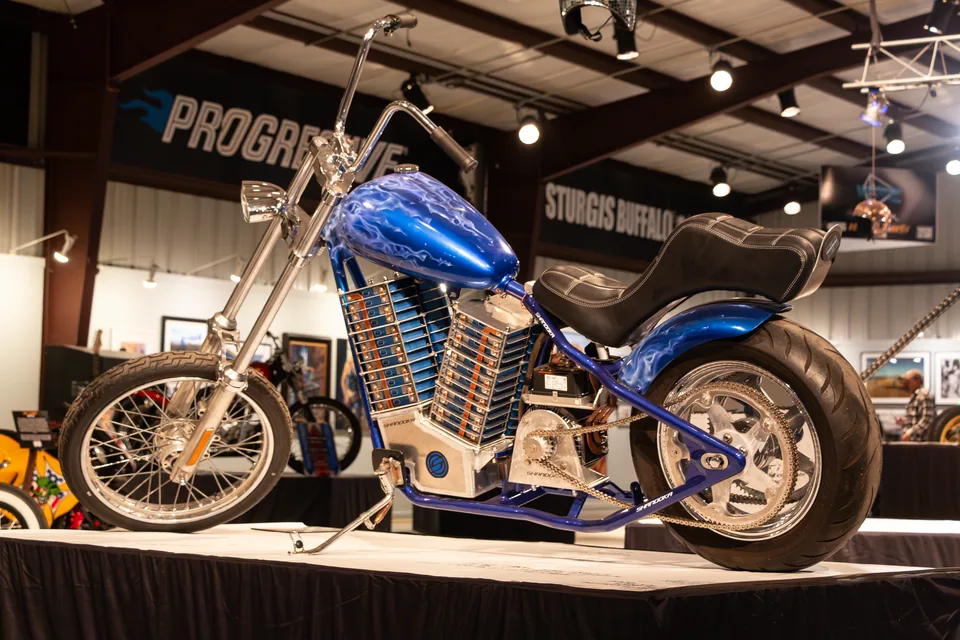
Maybe you saw this bike at the Buffalo Chip at Sturgis. Bolt in a patent-pending Shandoka V-Twin Multi-Fit system, and the only speed limit is your grip strength.
See the Custom Chopper build →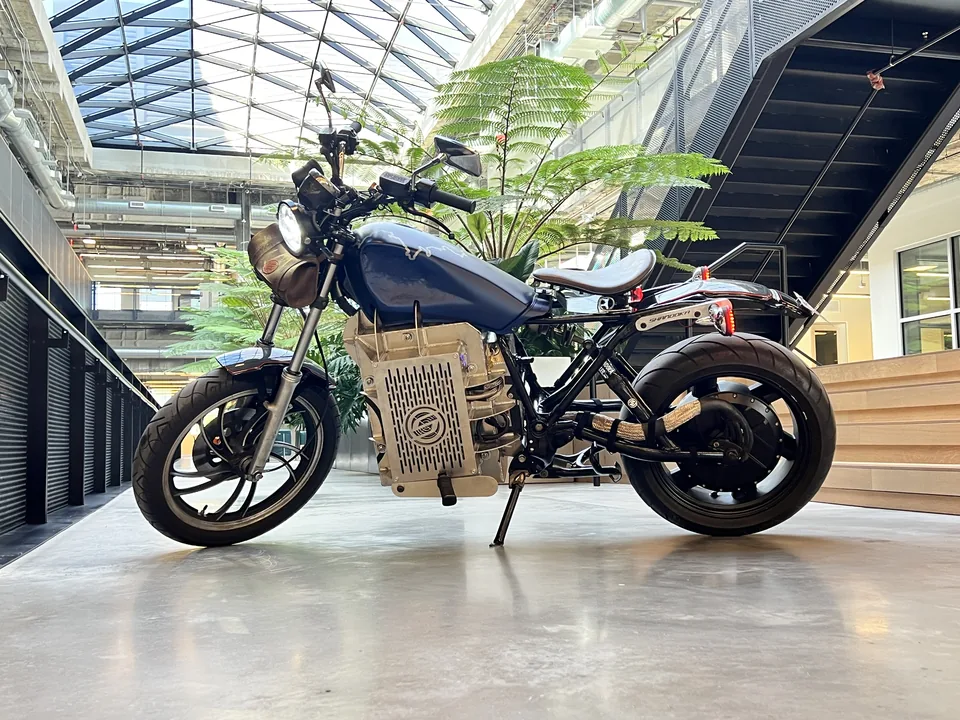
The Maxim XS400 started it all, in a garage in Sandy, Utah, in 2010. Two motor sizes, three batteries, and the classic lines of Yamaha's 1976 slimline cruiser.
See the Yamaha XS400 build →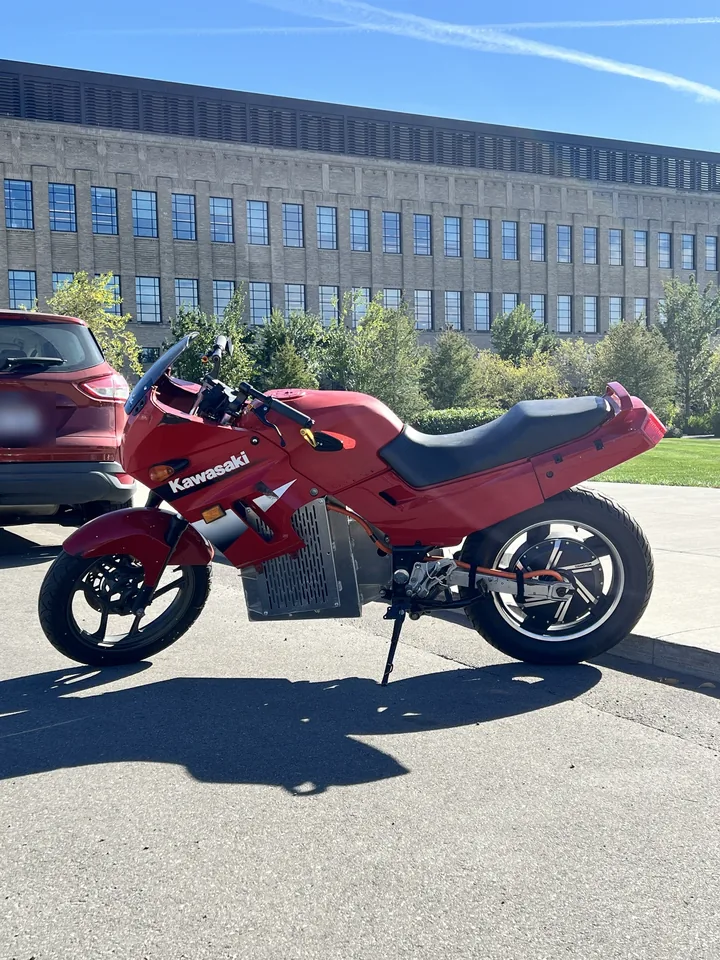
One of the most widely sold motorcycles in history, now with a 12 kW hub motor and sustained 70 mph, in Skinny or Sumo fitment.
See the Kawasaki Ninja 250 build →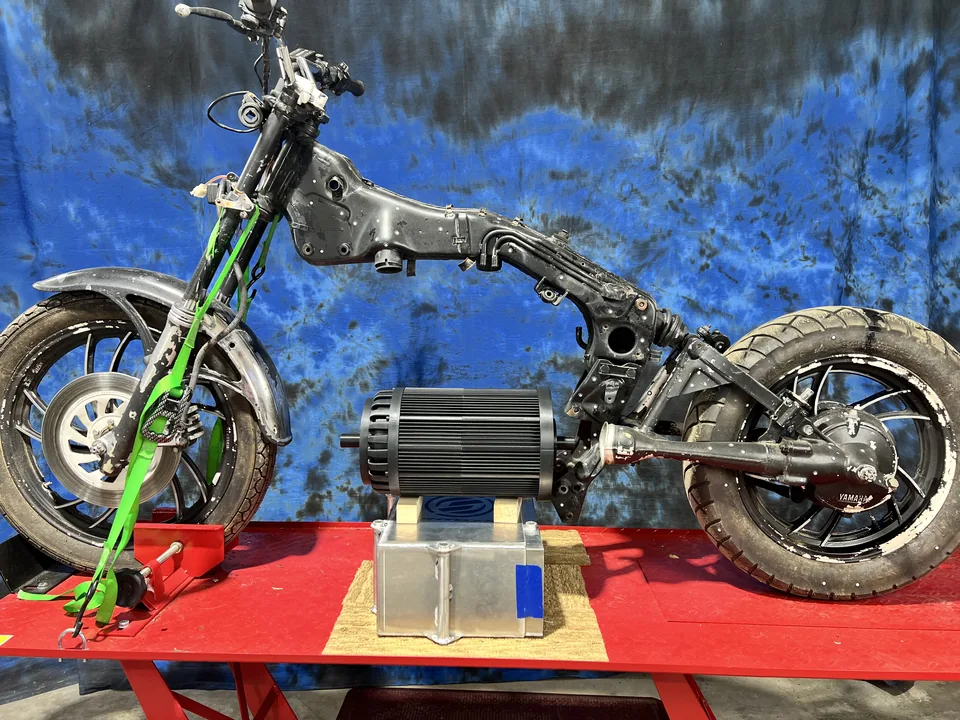
Our V-Twin battery stack on the patented structural system, across five frame sizes from the 250 through the 535 and 750/920 to the 1100.
See the Yamaha Virago build →Three motorcycles already in the shop, each with its own page and its own deposit. Pick one and we start the design with you.
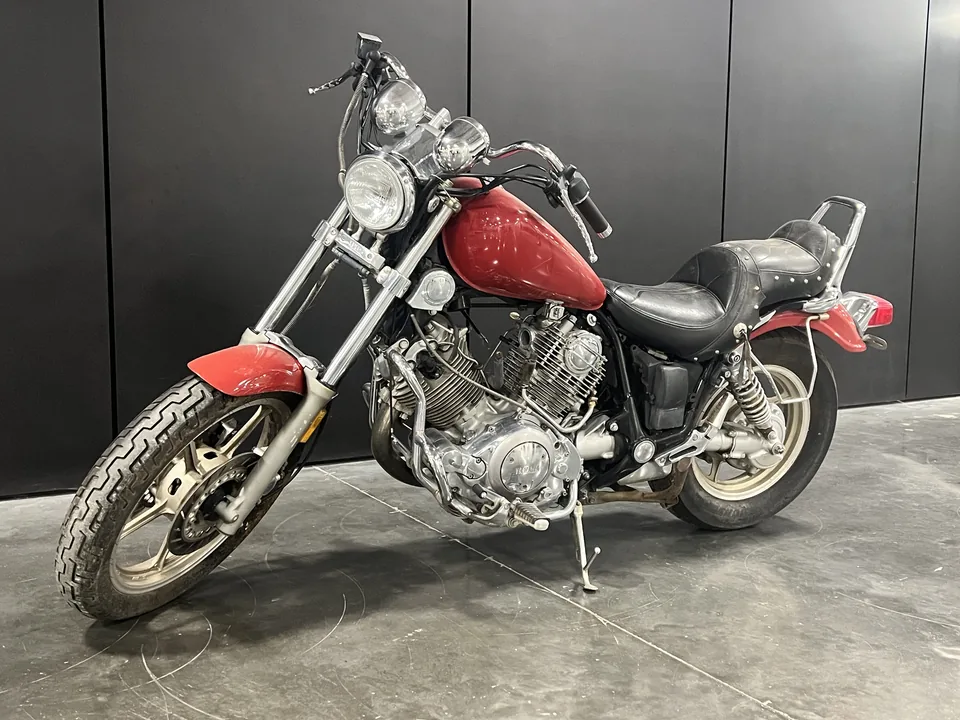
A superbly clean one-owner Yamaha Virago 1100 with all its original bodywork, leather and accessories, ready for the Shandoka electric drive. Suggested starting budget $35,000.
See Big Red →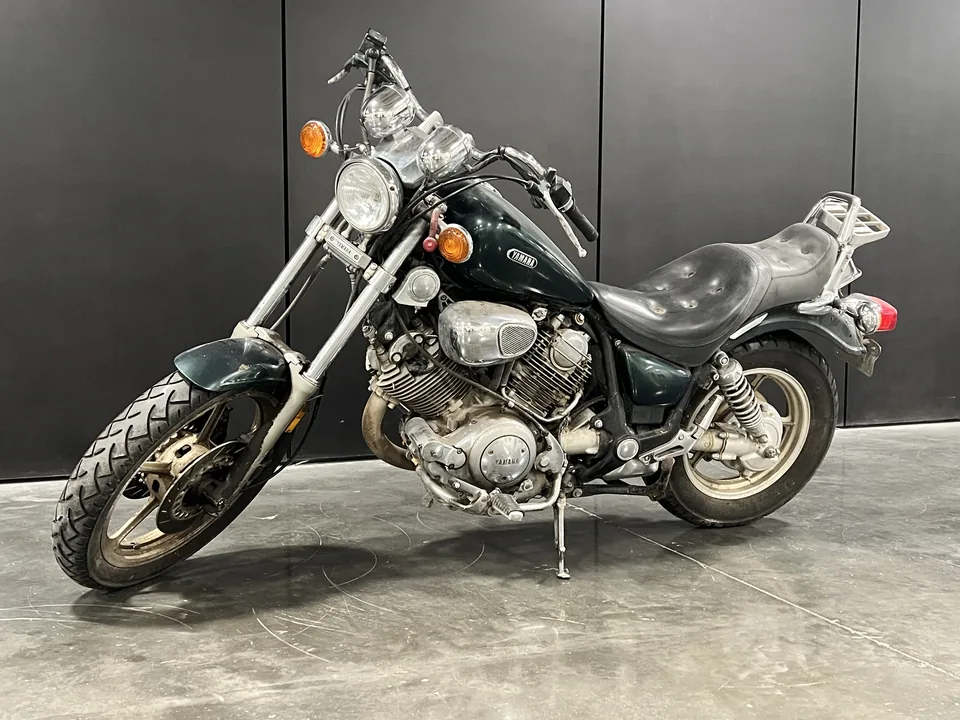
A Yamaha Virago 1100 cruiser that ran the roads of Colorado and the Four Corners, with a frame that was never crashed, ready for a retrofit to electric. Suggested starting budget $28,000.
See the Green Machine →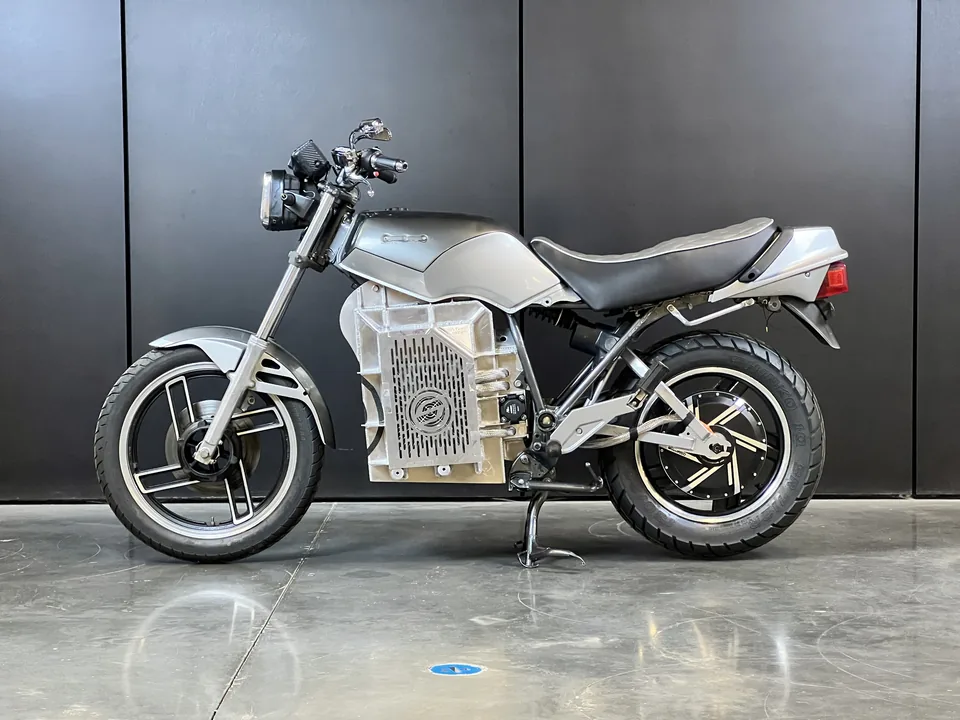
A 1982 Yamaha SECA converted to electric: 12 kW motor, 12 kWh battery, about 100 miles of town range, and a hand-sewn seat. $18,500 as configured.
See the QuickSilver →Every one of these starts the same way: something structural where the engine was, and a battery sized to the bike. The V-Twin system page has the engineering for the stack: sizes, frame matching, cooling and power tiers.
Many OEMs use structural engines today, and that's what our systems are built around. It could be one of these classics, or a Harley-Davidson Pan America with a bad engine (we can't wait to build one of those). Tell us what you have and we'll tell you whether it's a sensible build.
The Multi-Fit adapter takes the place of the structural engine and carries the loads the frame was built for, so there's no cutting the frame and no one-off welding. The battery and drive go in around it. We build it in Detroit, or a partner shop in our network builds it.
No. If you have the bike, we convert it. If you know the bike you want, we'll help you source it. If you know how you want to ride and the style you like, we'll help you choose the bike and then source it.
There's a motorcycle type and a price point for everyone. The cost depends on the platform, the battery and motor you choose and how much custom work goes into it. Tell us what you ride, or how you want to ride, and we'll quote the build.
From any household outlet. You don't need a charging station for most daily riding.
There's no engine to service: no oil changes, no fuel system and no tune-ups. Tires, brakes and the rest of the running gear are looked after the way they always were. There are things you need to do to keep your electric drivetrain healthy, and we'll help you understand what they are. We also offer specialty tools like our Digital Black Box for keeping track of your battery health and charge results.
Yes. Build a Shandoka with our team in Detroit and you'll be certified to make repairs and upgrades without voiding the warranty. Our technician course covers the electrical side from zero experience.
We stand by our work and strive for the best quality and product choices from the information available at the time.
Yes. The system is designed to step up: a bigger battery, a more powerful controller, or liquid cooling and chill plates, without starting over.
These are street-legal electric motorcycles, built by us or by a partner shop trained on the Shandoka system.
